
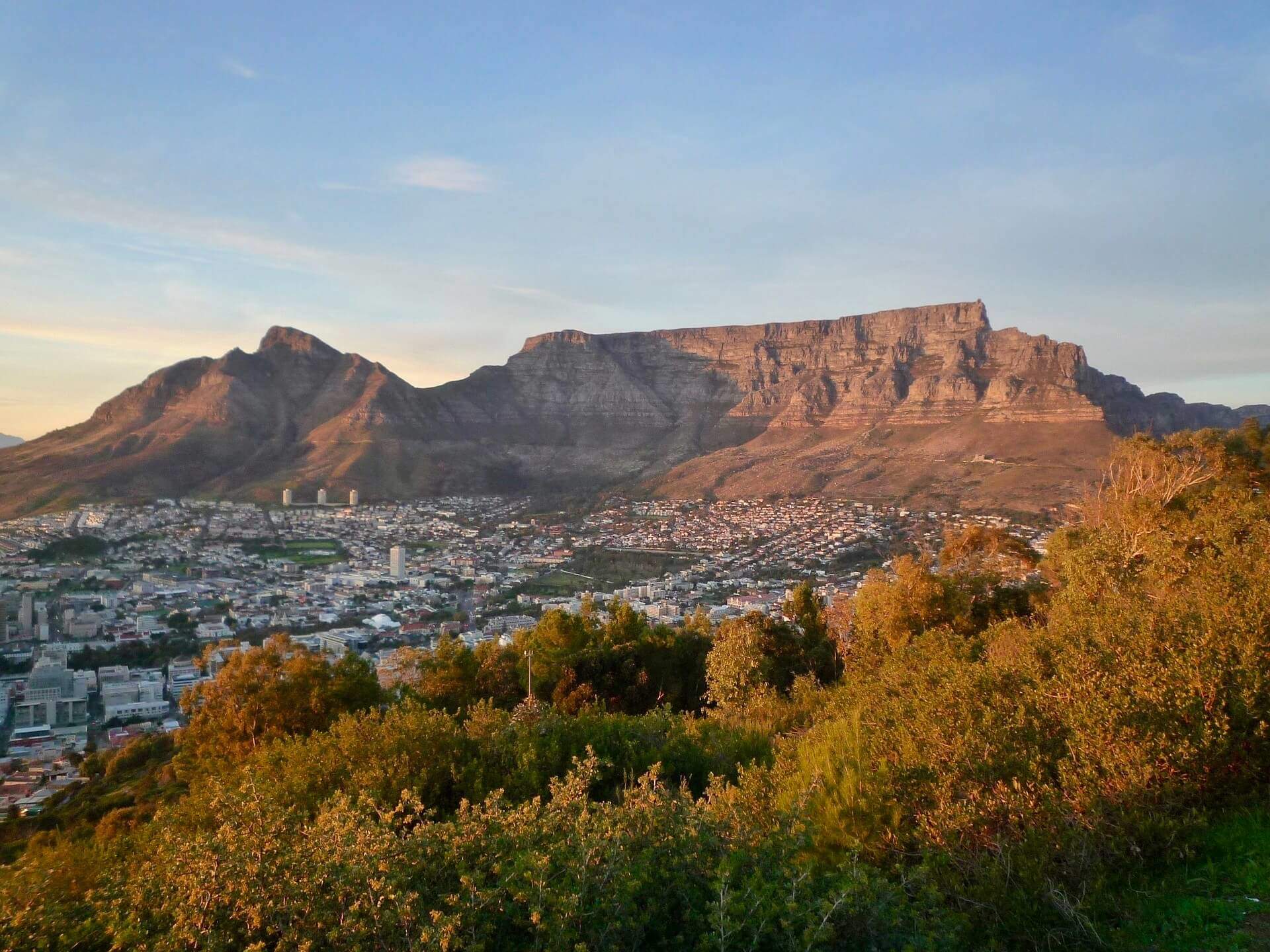
Table Mountain
Information
Table Mountain
Table Mountain is one of the most popular destinations in the world, and a must see for anyone visiting Cape Town. This majestic natural wonder has an incredible story, from how it formed and evolved over millions of years, to the unique plants and animals that call its slopes home.
Very few cities in the world can say they have a mountain rising from their very center. Table Mountain is one of the most photographed landmarks on Earth, and on a clear day, ships far out in the Atlantic can see its flat top from as far as 150 km away. Around 800,000 people visit Table Mountain each year, and since the Table Mountain Cableway opened in 1929, it has carried over 31 million visitors to the summit.
Table Mountain takes its name from its distinctive flat top. It is often covered by cloud formed by the southeasterly wind, a phenomenon locals call the Tablecloth, and one of Table Mountain’s most recognizable sights. Over the years, Table Mountain has also earned the nickname the Sleeping Giant, owing to its shape and silhouette. Long before European settlers arrived, the Khoi and San people knew the mountain as Hoerikwaggo, meaning Mountain of the Sea.
Table Mountain Quick Facts
- Height: Table Mountain has a height of 1,086 meters above sea level.
- Age: The formation of Table Mountain began more than 260 million years ago.
- Status: Table Mountain is a UNESCO World Heritage Site and one of the New7Wonders of Nature.
- Location: Table Mountain sits at the northern end of the Cape Peninsula, between Lion’s Head and Devil’s Peak.
- Cableway: The Table Mountain Cableway first opened in 1929.
Table Mountain’s flat summit stretches roughly 3 km from side to side, framed by steep cliffs and striking rock formations. Table Mountain sits between Lion’s Head and Devil’s Peak, forming an unmistakable backdrop to the city of Cape Town. Table Mountain marks the northern end of the Cape Peninsula, which stretches roughly 50 km south to Cape Point and the Cape of Good Hope. The Table Mountain range itself is made up of four main sections, Constantia Neck, the Back Table, Table Mountain, and Devil’s Peak.
Table Mountain is recognized by UNESCO as a World Heritage Site, and in 2011, after an international public vote that drew over 100 million votes, Table Mountain was officially named one of the New7Wonders of Nature.


Table Mountain Activities
Table Mountain offers a wide range of outdoor activities enjoyed by locals and visitors year round.
- Hiking: Table Mountain is home to dozens of hiking routes, ranging from easy, beginner friendly trails to advanced, technical routes involving rock scrambling. Routes vary significantly in distance, difficulty, and terrain, offering something suited to every fitness level.
- Trail Running: Table Mountain is a popular destination for trail runners, with routes such as Platteklip Gorge and the Pipe Track frequently used for training runs. The mountain also hosts several organized trail running events throughout the year.
- Rock Climbing: Table Mountain’s dramatic cliffs and sandstone rock formations make it one of South Africa’s most popular rock climbing destinations, with routes ranging from beginner friendly to highly technical.
- Mountain Biking: Several of Table Mountain’s trails offer excellent mountain biking terrain, particularly on the lower slopes and surrounding areas of Table Mountain National Park.
- Abseiling: Abseiling is available at the summit of Table Mountain, running daily for those looking for an added adrenaline rush.
- Guided Tours: A range of guided experiences are available on Table Mountain, from guided hikes to the summit to free guided walks around the plateau, offering visitors expert insight into the mountain’s history, geology, and wildlife.
The Table Mountain Cableway
For those who prefer not to hike, the Table Mountain Aerial Cableway offers a quick and scenic way to reach the summit. The Table Mountain Cableway operates two state of the art rotating cable cars, each carrying up to 65 passengers. The floor of each car rotates a full 360 degrees during the 4 to 5 minute journey, giving every passenger uninterrupted views of Table Mountain and the surrounding coastline throughout the ascent or descent.
- Departure frequency: The Table Mountain cableway typically departs every 10 to 15 minutes, depending on demand.
- Operating hours: Table Mountain Cableway operating hours vary by season, typically opening between 08h00 and 08h30, and closing between 17h00 and 20h00. The cableway operates weather permitting and may close temporarily in strong wind or poor visibility.
- Annual maintenance: The Table Mountain Cableway typically undergoes annual maintenance during winter, usually in late July or August. Exact dates vary from year to year, and the cableway may be closed for two to three weeks during this period. It is worth checking current maintenance dates before planning a winter visit.
- Buying tickets: Tickets can be purchased online in advance via the official Table Mountain Cableway website, or in person at the ticket offices located at both the Lower and Upper Cableway stations.
Best Time to Visit Table Mountain
Table Mountain can be visited throughout the year, though weather has a significant influence on the experience, and conditions vary considerably by season.
Summer (December to February) is Cape Town’s peak season, bringing warm, dry weather and the longest Table Mountain Cableway operating hours. This is also the windiest time of year, driven by the strong southeasterly wind known locally as the Cape Doctor, which frequently forms the Tablecloth cloud and can occasionally cause the cableway to close. Summer is also the busiest season, with the largest crowds and longest queues.
Autumn (March to May) is widely regarded by locals as the best season to visit. The summer wind eases, crowds thin considerably, and the weather remains warm, calm, and clear.
Winter (June to August) is Cape Town’s rainy season, bringing a greater chance of rain, mist, and reduced visibility, along with more frequent cableway closures. However, the mountain’s vegetation is at its greenest during this period, and visitor numbers are significantly lower.
Spring (September to November) offers a good balance of mild weather, smaller crowds, and blooming fynbos across the mountain’s slopes.
Regardless of the season, mornings consistently offer the clearest views and shortest queues, as the Tablecloth cloud and stronger winds tend to develop later in the day. Arriving early, ideally before 09h00, is recommended year round.
At the Summit
Once at the top, Table Mountain’s summit plateau offers paved walking paths leading to viewpoints in every direction, along with a restaurant, cocktail bar, and souvenir shop. Several short, well marked trails lead to notable viewpoints and landmarks, including Maclear’s Beacon, the highest point on Table Mountain, roughly a 30 minute walk from the Upper Cableway Station. Free guided walks are also offered daily at the summit, departing on the hour. Most visitors spend one to two hours exploring the summit before heading back down.
Accessibility at Table Mountain
Table Mountain has become significantly more accessible in recent years. The Table Mountain Cableway itself is fully wheelchair accessible, with lifts, ramps, and paved pathways available at both the Lower and Upper Cableway stations, and staff on hand to assist where needed.
At the summit, a newly opened Universal Access Walkway now allows visitors with mobility challenges, as well as those with prams, to explore a significant portion of the summit plateau on flat, stable paths, an improvement on the previously uneven terrain. The restaurant, shop, and restrooms at the summit are also equipped with ramped access.
Staying Safe on Table Mountain
Table Mountain should never be underestimated, and a few simple precautions go a long way toward ensuring a safe visit, whether arriving by cableway or on foot.
Stay on marked paths. Table Mountain has many steep gorges and sheer cliff faces. Straying from demarcated footpaths, or approaching cliff edges for a closer view or photograph, significantly increases the risk of a fall.
Check the weather in advance. Table Mountain’s weather can change rapidly and without much warning. Conditions that appear clear from the city can shift quickly at altitude, so it is worth checking the forecast before your visit and dressing appropriately for cooler temperatures and wind at the summit.
Carry water and sun protection. Cape Town experiences some of the highest UV levels in the world, and conditions at altitude intensify this further. Sunscreen, a hat, and sufficient water are essential, regardless of how you plan to reach the summit.
Remain aware of your surroundings. As with any large natural area, it is sensible to keep valuables out of sight and stay alert, particularly in quieter or less trafficked areas. Table Mountain National Park maintains a dedicated ranger presence across the mountain to support visitor safety.
With sensible precautions in place, Table Mountain is visited and enjoyed safely by hundreds of thousands of people each year.
Getting to Table Mountain
If visiting Table Mountain during peak season, it is worth considering alternatives to driving yourself, given the congestion and limited parking around the mountain during busy periods.
- Driving: The roads leading to Table Mountain are easy to navigate and well signposted. Table Mountain is visible from almost anywhere in the city, and most areas are within a 20 minute drive.
- MyCiti Bus: A convenient option, running every 30 minutes to the corner of Kloof Nek and Tafelberg Road, near the base of Table Mountain. Purchase your MyCiti card in advance. View the MyCiti bus timetable.
- Uber: A popular and convenient option in Cape Town, taking you directly to the Table Mountain Cableway station without the hassle of parking. Download the app for fare estimates.
- Guided Tours: A knowledgeable guide offers far more than transport, sharing insider tips on timing, parking, and the best experience overall. Many tour operators also have special access permits for pick up, drop off, and parking near the Table Mountain Cableway station.
- Metered Taxis: Another reliable option, and one that can be pre booked in advance. Taxis are also usually available at the base of the Table Mountain Cableway station for the return trip, often a quicker option than pre booking given the traffic and congestion typical of the area.
Parking at Table Mountain
Parking is available along most of Tafelberg Road, aside from a few restricted corners and reserved areas close to the Table Mountain Cableway station. Two additional parking lots are located at the bottom of Tafelberg Road, just off Kloof Nek. While this adds a short walk, roughly 1.5 km, uphill to the cableway station, a free shuttle runs between this parking area and the station every 20 minutes.
Arriving early, before the Table Mountain Cableway station opens, typically means plenty of available parking.
Frequently Asked Questions About Table Mountain
Do I need a permit to visit Table Mountain?
No permit is required to visit Table Mountain, whether hiking or taking the cableway. Table Mountain is open to the public year round, free of charge, with tickets only required for the cableway itself.
How long does the Table Mountain cable car take?
The Table Mountain Cableway journey takes 4 to 5 minutes each way.
How long does it take to hike up Table Mountain?
Hiking times vary significantly depending on the route, ranging from around 2 hours on shorter, more direct trails to 5 hours or more on longer, more technical routes. Browse our guided Table Mountain hikes for specific times and difficulty levels for each route.
Is Table Mountain wheelchair accessible?
Yes. The Table Mountain Cableway, both cable stations, and a significant portion of the summit plateau, including the new Universal Access Walkway, are wheelchair accessible.
What is there to do at the top of Table Mountain?
The summit of Table Mountain offers paved walking paths, scenic viewpoints, a restaurant, a cocktail bar, and a souvenir shop, along with free guided walks offered daily.
Are drones allowed on Table Mountain?
No, drones are strictly prohibited on Table Mountain and across the whole of Table Mountain National Park. SANParks enforces this rule directly, and unauthorized drone use is treated as a serious offense.
Can I bring my dog on Table Mountain?
Dogs are not permitted on Table Mountain’s main hiking trails or at the summit. Dog walking is only permitted in specific designated areas of Table Mountain National Park, such as the lower slopes accessible from Constantia Nek, and requires a SANParks My Activity Permit.
When does the Table Mountain Cableway close for maintenance?
The Table Mountain Cableway typically closes for annual maintenance during winter, usually in late July or August, for a period of two to three weeks. Exact dates vary from year to year, so it is worth checking before planning a winter visit.


